The Starfish

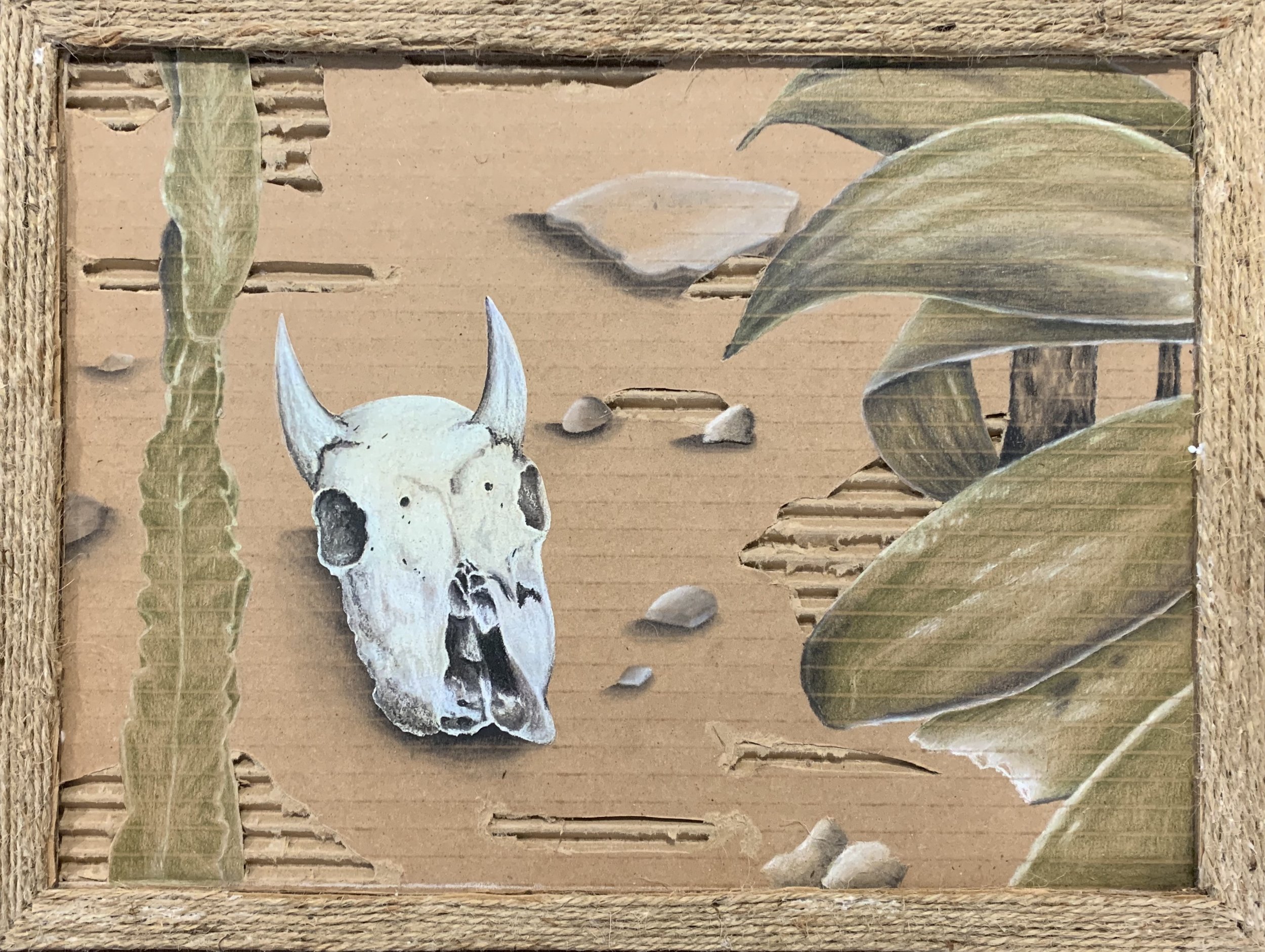
Photo by Ryan Lemp (2016 archive)
It was a glass-blown creature, its arms and limbs a mosaic of teals and blues, capturing the ocean itself. Dusted on its back were the stars, small phosphorescent crystals that shone in the glow of the moon. When I was first presented with the starfish, you both threw up your hands, then exclaimed, “That’s a girly gift.” The prize could have belonged to any one of us four, and would have rather disappointed eager young boys looking to cash out their winnings. You’d be better rewarded with a milkshake the size of your head served out the window by the resort pool. Cheaper, too, but there was no point in fussing anymore as your dad presented the starfish to me. I had won. There it was in my hands, the pinnacle of our entire trip. The grand prize for winning the annual seashell-collecting tournament that proved to be, despite its name, just that one summer.
Your dad cupped his hands around the starfish, then allowed me to peer inside. I watched it glow with a smile, giddy as the small sandpipers skipping and jumping across the Florida beach we inhabited for one week every year of our friendship. Even if friendship wasn’t the word. We four fought like brothers and sisters, fights that ended in tears and chipped teeth and spitefully broken iPods. A similar spat would have ensued had the prize held any value to you, but alas, it did not.
The starfish sits on a pedestal on a shelf in a teal childlike bedroom. I only see it once or twice a year, about the frequency that I see you, but the starfish withstands the test of time and distance, as memory often does. Memory, like when your dad pulled me aside after my ceremony to say:
“Let me tell you something.” He crouched down to my height, beckoning me closer. “I always knew you’d win.”
He’d picked out the starfish after we’d stumbled, sweaty and heat-dazed, through an overpriced gift shop. I didn’t remember pointing to the little creature until he unveiled the memory: how I put my sandy, sticky fingers on the glass, then walked away.
I don’t know if you remember this. Perhaps, if you had won, you would have, but your disappointment in the face of defeat was short-lived, not worth etching into the rock of your memory. I think we all got milkshakes afterward, anyway, which quickly became contaminated with saltwater as we splashed one another in the pool.
The starfish cannot control where it drifts. It crawls slowly, carefully, across the sea floor, but has no way to combat the currents that sweep it away or cast it to the shore. We made small pools in the sand to collect upended starfish in hopes they would regenerate. The four of us played starfish hospital for the length of our week, sprinting up and down the beach for lost souls that needed our help. There was a deep empathy in each of us for the five-limbed drifters, an empathy that was often lost on each other as we kicked sand into one another’s eyes, or as we drifted, like the starfish, through middle school, high school. Our gazes, too, would drift to our feet when we saw each other in the hallway, driving around town, at family dinners, dinners where we were once confused for brothers and sisters, a misconception aided by our being twins, two boys and two girls. Symmetrical, like the clamshells we dug up in the sand.
Our parents left those restaurants beaming with pride as elderly couples lined up to say, “They’re not on their phones at all! Such good kids.” A comment met with begrudging glares from younger couples trying to enjoy their Longhorn Steakhouse meals, interrupted by squawks and cackles as we retold the same stories that never lost their humor. Stories like the elaborate prank-call routine we concocted on a beach day too hot to endure, locked inside the hotel room giggling, then shushing, then giggling again. An ebb and flow not unlike the whirring in your ear when you clasp it to a seashell, like the giant conch that won me the competition. At least I think it was. I better remember the character-acting routine you both improvised on the spot as you called a mutual friend from my phone. I can still recite it from memory, a memory bright and shining like those dazzling crystals on the bridges of my starfish’s limbs. Memories that still shine, even when the lights go out, when shadows claim its glassy limbs.
The starfish is a symbol of regeneration. To lose, to grow again. To lose. In that tomb of loss, when the starfish spirals through the ocean or struggles to climb across the sand, I wonder if the starfish mourns—assuming it has a semblance of thought. I wonder if it knows its limb will grow back, or if every time a limb is lost, the starfish thinks it’s lost forever. I wonder which is better: to lose and never regrow, or to live in a cruel cycle of mourning, false gain, mourning again. You could answer this better than I could. I wonder how long it will sting for you, the empty space where something once was. Do you wonder, as I do, if you could have done something differently to stop it, to will a liver to grow back, a growth that only festers in tumors or hospital bills? Not that I would know. I wasn’t there on those long days and nights, the beginning of the end, the end itself.
The starfish stands for resilience, the jewelry store websites say, a resilience I imagine you had to muster when the decision to pull the plug fell to you, a decision I slept through states away. The same resilience sprouted in your father as he fought for his life, in vain and too late. Stubborn, as you are stubborn, as I am stubborn.
My sister and I missed those long days, just as we missed family dinners, vacations, your past ten birthday parties. You missed ours, too, and the divide makes me wonder, had we been home, if you’d have wanted us there in those waiting rooms. I wonder if you’d expected to hear from us, or if my text would have come as a surprise to you both. But how does one send such a thing over text? If I sent you both the same messages separately, would it have been impersonal? If I sent one message to the both of you, was it lazy? It remains a hypothetical, because I never sent it, just as I never read the obituary your mother wrote for the local paper. I saw the photo, your dad holding up a bass the size of his face, and the headline. My parents told me she did a beautiful job. I believe that. That’s why I can’t read it, why I never sent a text, why I couldn’t bring myself to like an Instagram post of you sitting on your father’s knees as children, the children I met at T-ball practice all those years ago, collected shells with on the beach, fought beside that day at a neighborhood restaurant when a kid called one of us a name we didn’t know the meaning of. Memories that still shine, because we will them to shine, because if they don’t, how will we feel our way through the dark, the inevitable night that bruises on the edges of all our lives?
The starfish is a symbol of renewal, the sun at the cusps of every early morning, a light that we cannot see, but we know will rise. Renewal, like sending our mothers a photo of us as kids on the beach, sunburnt and beaming. Like reaching out, even if our time together will cease to overlap. When that effort is made, the door ever so slightly opened, something begins to grow. As long as the starfish’s core is still intact, the limbs will grow back. A slow growth, sometimes years, spurred by a core forged from laughter, from pinky promises, from vows of loyalty we never swore but upheld with every swinging fist. Amid distance, amid loss, it will grow, then lose, then grow. A perpetual danger or shelter. A tide.